Fluids first
Engine oil, hydraulic oil, transmission oil, fuel and coolant are drained before anything else. Hydraulic tractors hold a lot of oil, so this matters. Leaks are plugged before loading where we can, and the rest is handled at the recycler.
Tire ballast
If the rear tires are filled with liquid, it's drained and handled properly before the tires go to recycling. The ballast is drained into proper containers, not onto the ground.
Cast iron and steel
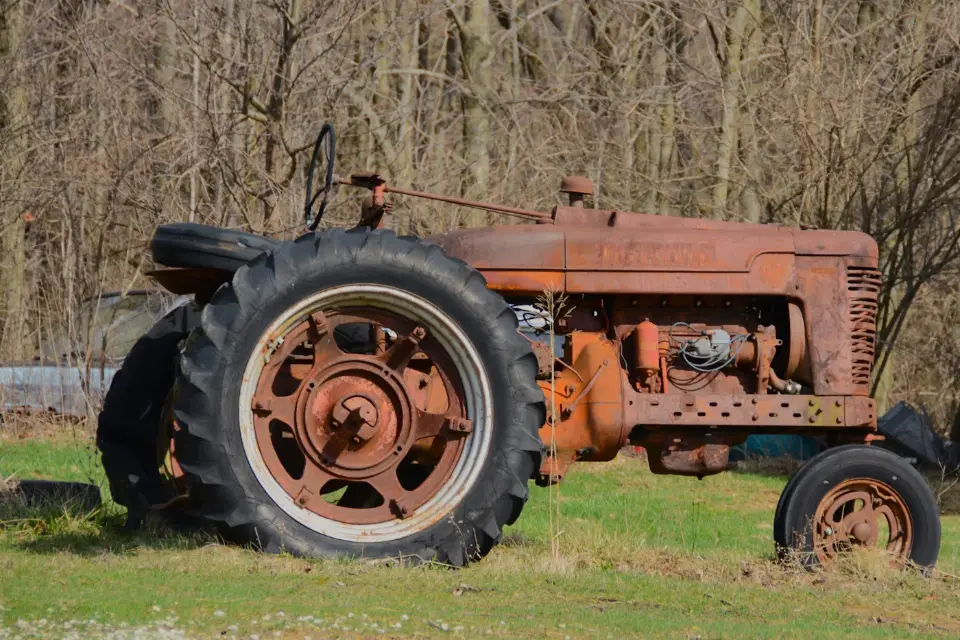
Old tractors are mostly cast iron and steel. Engine blocks, transmission cases and axle housings are sorted and recycled. Cast iron is heavy, which is why even a small old tractor carries real metal value.
Parts that live on
Good hoods, fenders, seats, gauges and engine parts from popular models are often pulled and sold to people keeping other tractors running. That's part of why a scrap tractor from a popular line can be worth more than its weight.
Batteries
Tractor batteries are lead-acid and go to a battery recycler. If yours is cracked or leaking, tell us and it'll be handled carefully. Loose batteries lying around the farm can go on the same load if you tell us.
Why recycling beats leaving it
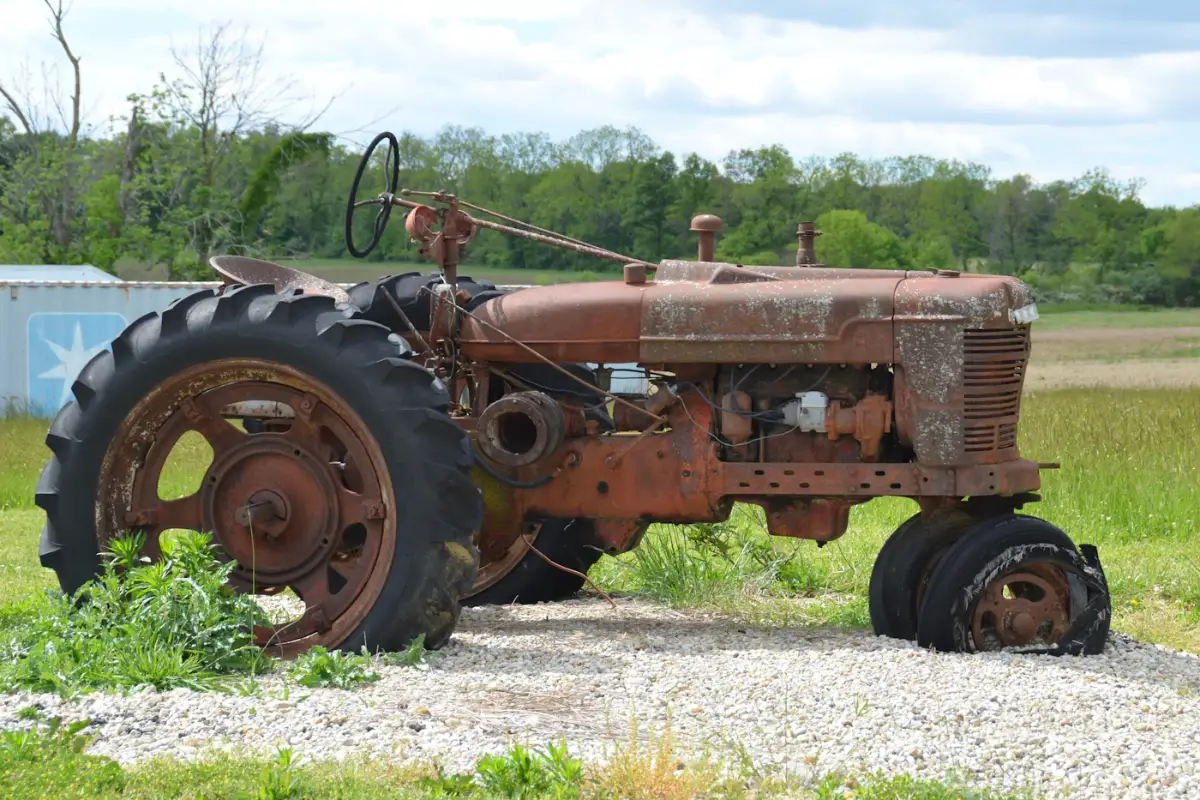
A tractor rusting in a field slowly leaks oil and fuel into the ground. Recycling it removes that risk and frees up the space. Clearing it also frees up space for equipment you actually use.
Is pickup included?
Yes. The pickup is part of the offer, and you know the figure before anything is booked. There's nothing to pay on top for the deck or the loading.
Scrap piles and parts
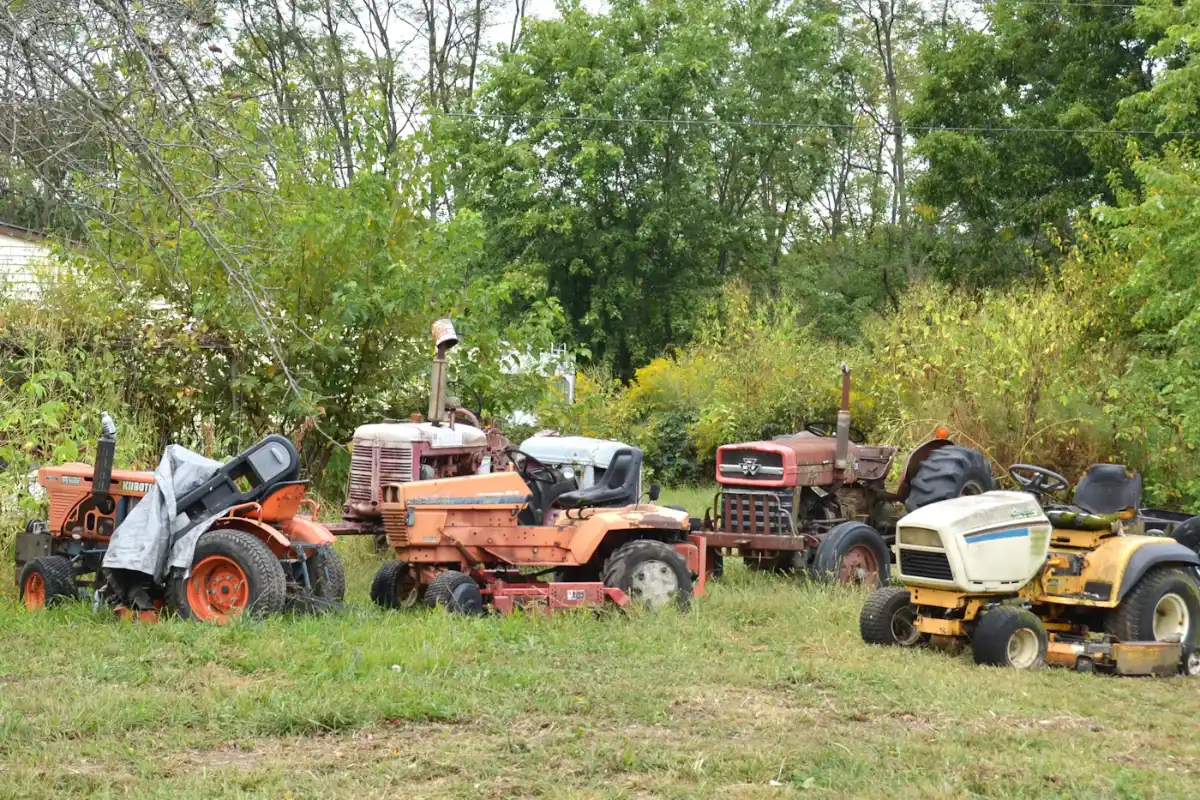
Farms collect old parts: wheels, hoods, axles, worn implements and engine pieces. They can go with a scrap tractor in the same trip. Gather them near the tractor if you can, and tell us roughly how much there is so we bring enough truck.
Burned or crushed tractors
A tractor that burned or was crushed under a falling tree or a collapsed shed still has metal value. Tell us what happened and send photos. If an insurer is involved, check that the tractor is still yours to sell.