Seized engines
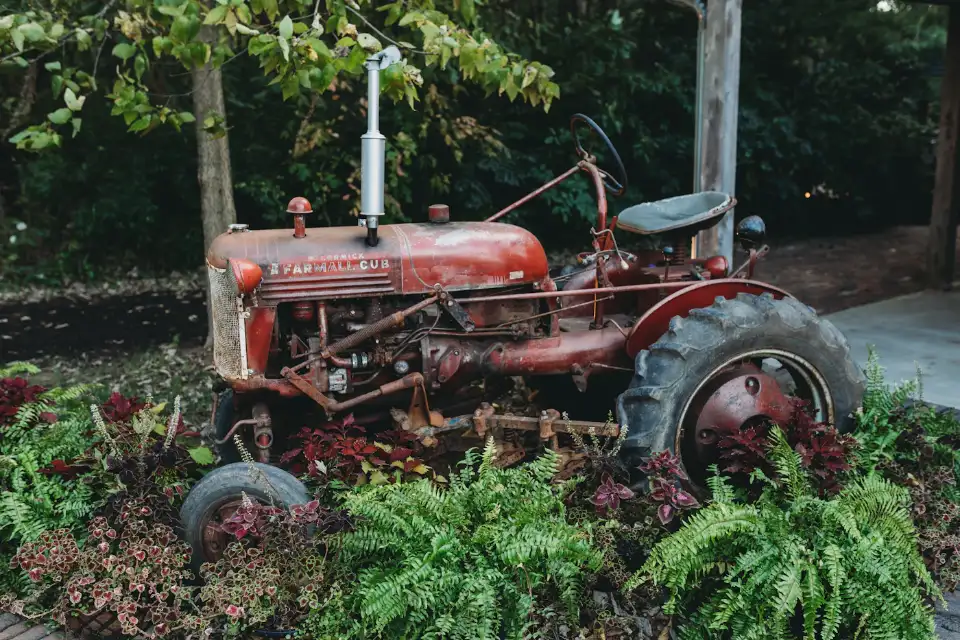
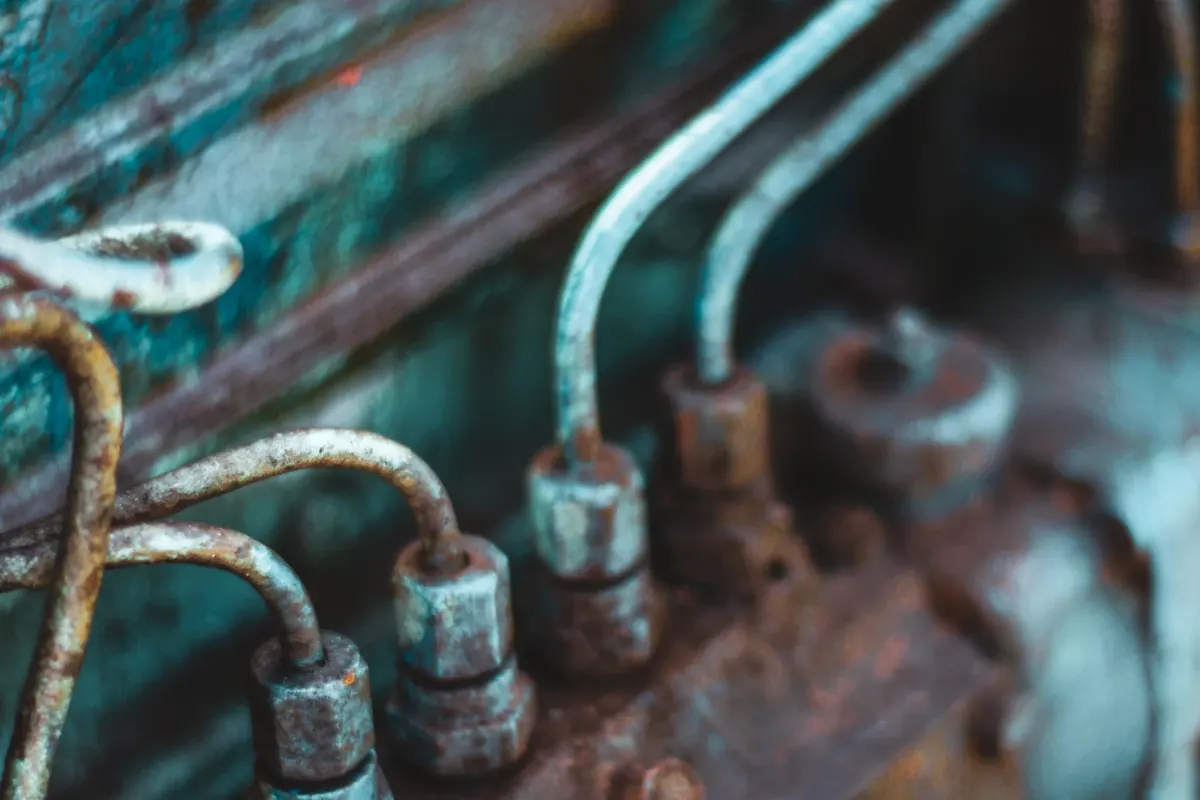
Water gets into an engine through an open exhaust or a cracked head and rusts the pistons in place. That's common, and it doesn't stop a sale. Don't force a seized engine with a bar or a starter; it can crack something that still has value.
Brakes and transmission locked
If the tractor won't roll, the tow operator winches it onto a tilt deck. Tell us if the rear wheels turn at all, since that changes how it's loaded. A tractor that won't roll at all can still go on a tilt deck with a winch.
Sunk in or grown in
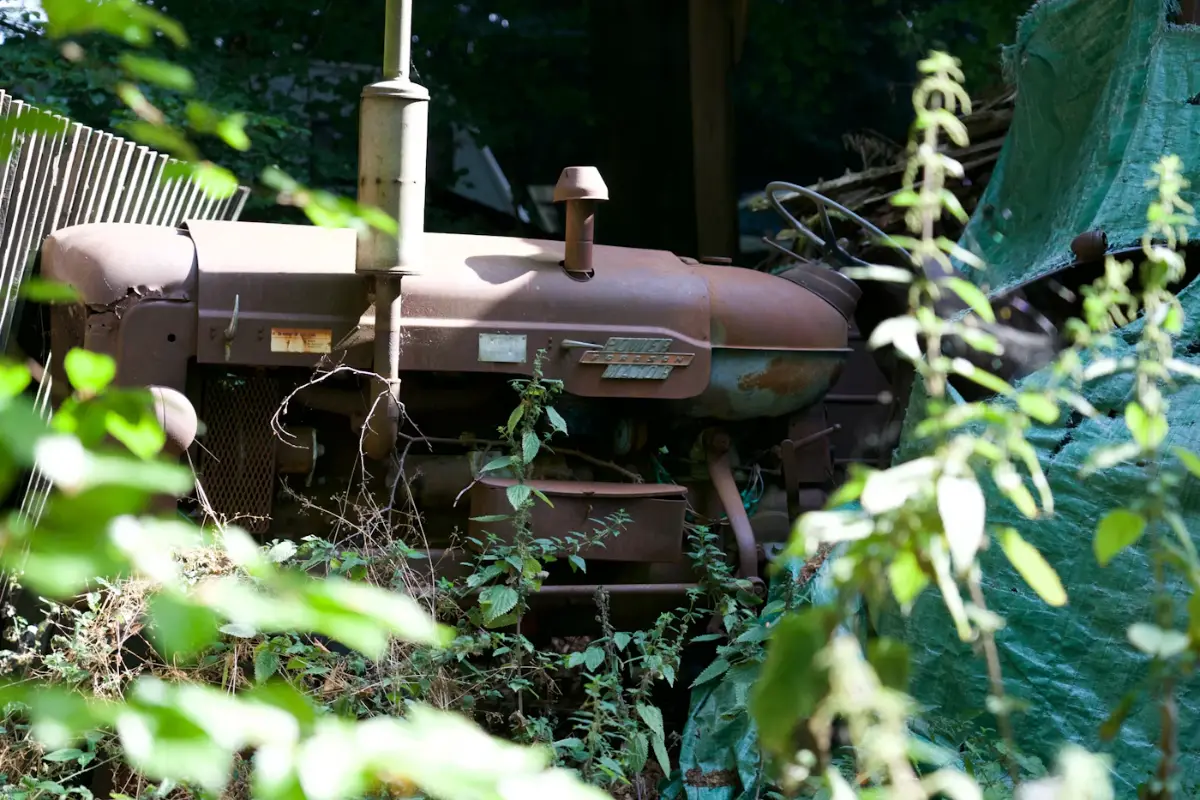
Tractors left in a field settle into the ground and get grown over. Clearing a little brush and waiting for dry ground is usually all it takes. If the ground is soft, waiting for a dry spell saves ruts in your field.
Don't sink money into it
A new battery, starter or tires rarely pays off on a tractor being sold as is. Sell it the way it sits. Small fixes like a battery are fine if you need the tractor to move, but they rarely pay back.
Lost keys
Many older tractors don't need a key, and the ones that do can still be winched. We just need proof it's yours. Many old tractors were never keyed at all, so a missing key is rarely a problem.
Fuel and leaks
Old diesel can turn to sludge and fuel lines crack. Leaks are common on tractors that have sat. Tell us if there's a puddle under it so we can bring absorbent. If the tank has old fuel in it, leave it; it's drained at the yard.
Stuck clutch
A clutch that has rusted to the flywheel after years of sitting is common. The tractor may start but won't move. That doesn't stop a sale, and it's usually cheaper for us to load it than for you to free it.
Hydraulic failures
A tractor that runs but won't lift has a hydraulic problem, often a worn pump, a failed seal or contaminated oil. Tell us what happens when you work the lift. A loader that won't hold is worth mentioning too.
Proof that it's yours
We need reasonable proof the tractor is yours to sell: a bill of sale, an old invoice, a registration if it was ever road-licensed or property records if it came with the land. Tell us what you have and we'll say whether it's enough.